Grief Bacon: My Book of German Words That Refuse to Translate
By Liesa Witt · Published · Updated
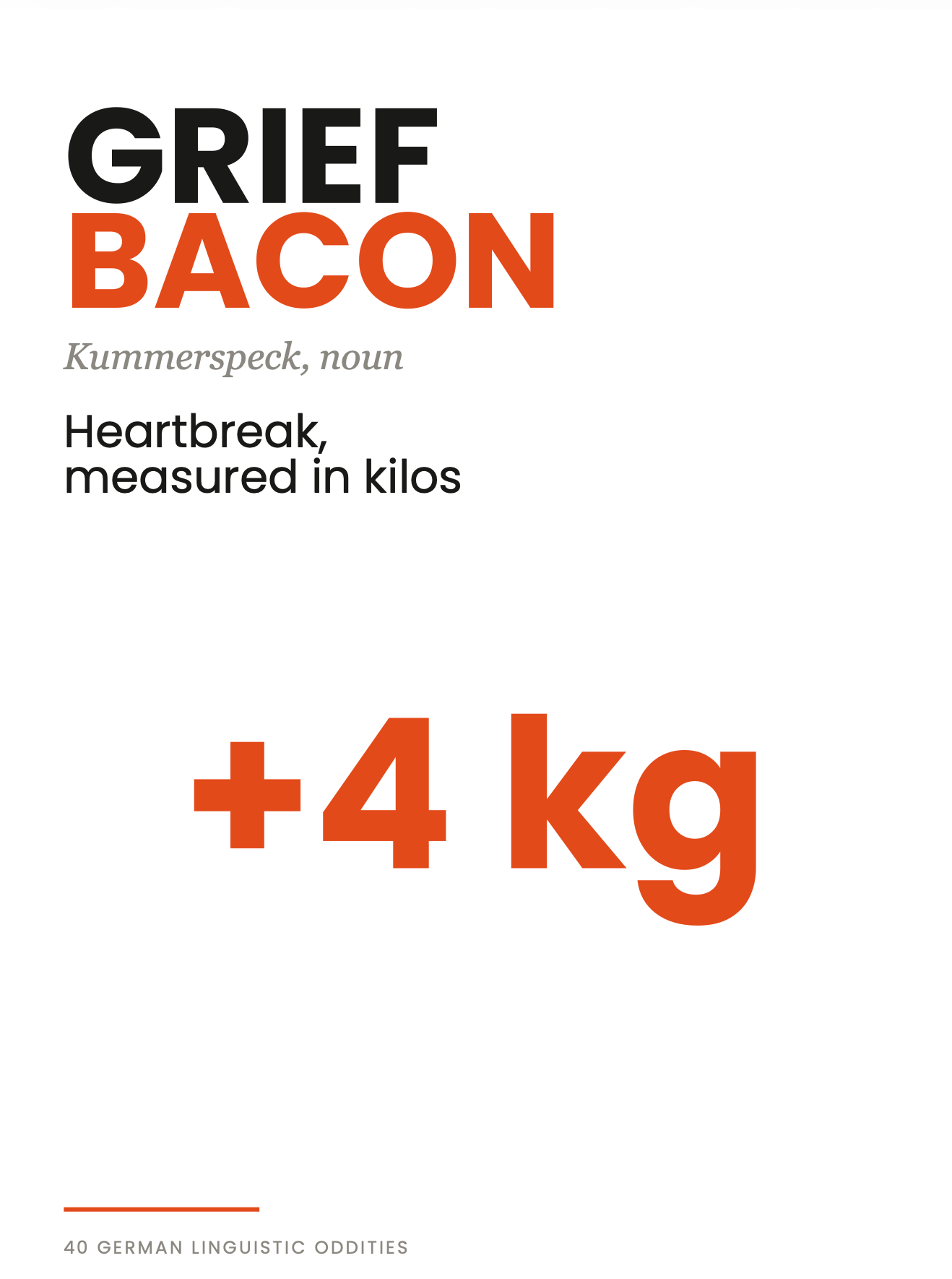
Kummerspeck means grief bacon. My first book collects 40 German words, idioms and false friends, and the culture hiding behind them.
Grief Bacon is out in the world
Here is a warning I have given more than once, usually at a dinner table, usually a second too late:
**Be careful if a German offers you a Gift. In German, Gift means poison.**
That sentence is the whole reason this book exists.
In August I stopped calling it a private project and pressed publish. Grief Bacon: Heartbreak, measured in kilos is my first book. It is not a phrasebook. It is a collection of 40 German words, idioms and false friends, and an invitation to treat language learning as something you can actually enjoy.
Why "grief bacon"?
Kummerspeck is the weight you put on after a breakup. Kummer is grief, Speck is bacon. Germans looked at heartbreak, watched it walk to the fridge, and gave the result a name. There is a word for it, and it is not a kind one.
That is the whole book in one entry: a word that sounds absurd in translation and makes complete sense once you know the people who say it.
The words that would not come with me
I did not set out to write a book. I kept bumping into these words while speaking other languages.
I would be mid-sentence in English and reach for something that was not there. Not a missing word, a missing concept. The word existed in German because the culture around it existed in German. English can describe it. It cannot say it.
So I started collecting. Then I started sharing them with friends who were learning German, mostly because they were funny. The more I played with them, the clearer it became that the words were not the point. The habits underneath them were.
What is inside
Every entry gives you the phrase, how to say it, what it literally means, what it really means, and a short piece on where it came from. There are illustrations. There is a quiz. There is a page at the back for the ones you collect yourself.
Who it is for
Language learners. Expats and travellers. Anyone with a German colleague they do not entirely understand. Anyone who has ever felt that learning a language was mostly an exercise in shame. This is the opposite of that.
You will not become fluent. You will become funnier.
Writing it, and what that took
I did countless rounds of reading, cutting, and checking. I used AI as an editor along the way, which turned out to be less about fixing my grammar and more about being asked, repeatedly, whether I actually meant what I had written.
I had a good time. That surprised me most. I have spent years writing documents that had to be correct. This one only had to be true and fun, and those are very different jobs.
Help a first book find its people
If this made you smile, three small things help more than you would think:
1. Get a copy, for yourself or for the German learner in your life: Grief Bacon on Amazon 2. Leave a short review. One honest line makes a real difference for an independent book. 3. Send me your word. Which German phrase confused you most? I am still collecting.
---
I write about the space between structure and humanity, how people learn, how organizations keep what they know, and how to find your footing when everything is shifting.
About the author
Liesa is a German founder and writer living in New York City. She writes first-hand guides for Europeans moving to New York and honest stories about building a life after the move.